Visiting timetableClosed
|Monday, October 12, 202677 Rue de Varenne, 75007 Paris, France
Back to techniques
materials
Rodin’s Materials and Lost‑Wax Casting
Step‑by‑step lost‑wax, material roles, and simple math for thickness and mass—all through Rodin’s workshop lens.
12/15/2025
20 min read
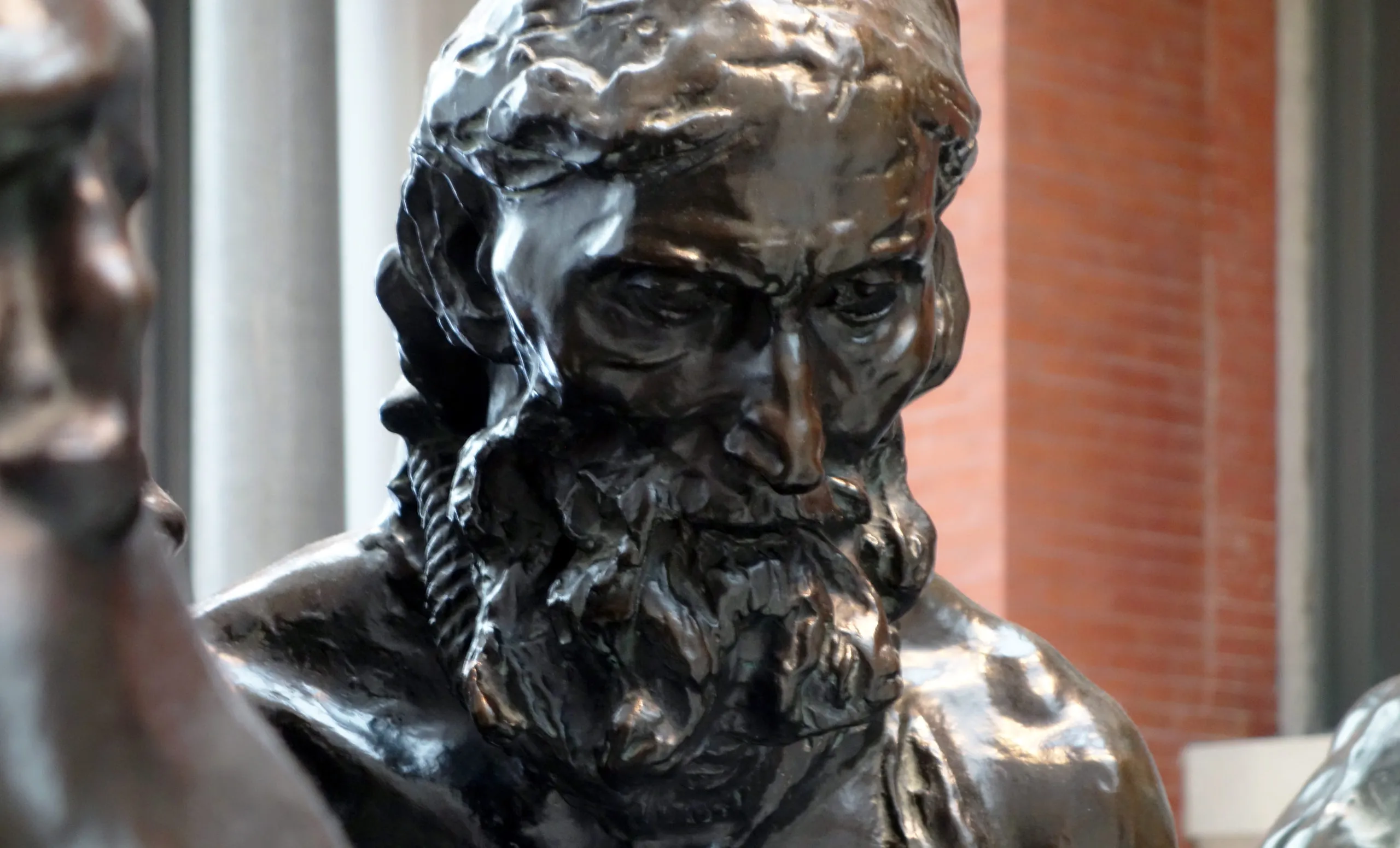
      Rodin’s studio moved among **plaster**, **bronze**, **marble**—each chosen for **gesture** and **light**.

      ---

      ### Lost‑Wax in Four Moves

      1. Model in **wax** around a core.
      2. Encase in **investment** (ceramic).
      3. Heat to melt wax; **pour bronze**.
      4. **Chase seams**; **patinate** for color.

      | Medium | Why Rodin used it |
      |---|---|
      | Plaster | Iteration & assembly |
      | Bronze | Durability & detail |
      | Marble | Flesh & light |

      > Plaster is **truth**; bronze is **memory**; marble is **dream**.

      Simple mass for thin shell of thickness (t):

      $$m approx
ho_{ ext{bronze}},(A,t)$$
      Where (A) is surface area—thickness trades **weight** for **stability**.

      ---

      ### Context & Background

      - Foundries collaborate on **chasing** and **patina**; stamps record **history**.
      - Plaster enables **assemblage** and **scale shifts**.
      - Marble selection balances **veining** with **structural logic**.

      ---

      ### Deeper Dive: Material as Meaning

      Bronze **remembers** tools; marble **glows** under polish; plaster **speaks** process. Rodin composes **material sentences**—each choice shifts **tone** and **time**.

      ---

      ### Quick Facts

      | Item | Detail |
      |---|---|
      | Bronze Density | ~8.7 g/cm³ |
      | Shell Thickness | Often 4–7 mm |
      | Patina Types | Brown, green, black |
      | Marble Finish | Gloss, satin, tooth |

      ---

      ### FAQs

      - **Do patinas change?** Conservators stabilize with **wax**; color can **shift** gently.
      - **Is thicker bronze better?** Thickness balances **weight** vs **rigidity**—context matters.
      - **Why plaster on display?** It’s **process truth** and **study archive**.

      ---

      ### Pro Tips

      - Look for **seam lines**—they map **casting paths**.
      - Note **patina gradients** in sunlight.
      - Compare **plaster anatomy** to final bronzes.
About the Author

Studio Conservator
As an art lover and Paris flâneur, I created this guide to help you experience Rodin’s world — from the rough vitality of clay to the quiet glow of marble.
Tags
Lost‑Wax
Bronze
Marble
Plaster
Technique
Comments (0)
Leave a Comment
Loading comments...