Visiting timetableClosed
|Monday, October 12, 202677 Rue de Varenne, 75007 Paris, France
Back to collections
drawings
Rodin’s Drawings at the Musée Rodin
A study of Rodin’s drawings—how lines move, washes breathe, and negative space activates gesture.
12/16/2025
16 min read
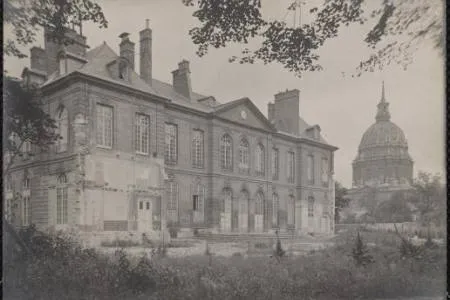
      Drawing is **time on paper**. Lines flicker; washes **breathe**; emptiness **acts**.

      ---

      ### Reading the Page

      - **Economy** of line, **excess** of motion.
      - **Translucent washes** set rhythm.
      - **Negative space** becomes **active**.

      | Element | Effect |
      |---|---|
      | Line | Direction & energy |
      | Wash | Atmosphere |
      | Paper | Tone & texture |

      > Think of these as **dance notations** for sculpture.

      ---

      ### Context & Background

      - Works on paper function as **idea labs** for **sculpture**.
      - Rapid **gesture** tests **movement** before mass.
      - Watercolor **breathes** color into **line**.

      ---

      ### Deeper Dive: Negative Space as Actor

      Rodin lets **blankness** stage **presence**—the unsaid becomes **structure**. Lines **travel** rather than describe; movement **precedes** volume.

      ---

      ### Quick Facts

      | Item | Detail |
      |---|---|
      | Media | Pencil, ink, watercolor |
      | Function | Study & invention |
      | Motif | Bodies in motion |
      | Display | Often small, intimate |

      ---

      ### FAQs

      - **Are drawings finished works?** Many are **studies** with **artistic autonomy**.
      - **Why so few lines?** Speed and **clarity**—find **gesture** first.
      - **Where to stand?** Close enough to feel **paper texture**.

      ---

      ### Pro Tips

      - Track a single **line** across the page.
      - Tilt head to read **wash gradients**.
      - Compare drawing **motifs** to nearby sculptures.
About the Author

Curatorial Writer
As an art lover and Paris flâneur, I created this guide to help you experience Rodin’s world — from the rough vitality of clay to the quiet glow of marble.
Tags
Drawings
Watercolor
Line
Gesture
Paper
Comments (0)
Leave a Comment
Loading comments...